Tile Regrouting Melbourne: Epoxy Regrouting Done Properly

We cut out the old grout with a depth-controlled machine, pack in epoxy grout treated with Efflock, then seal it. Showers, floors, balconies and splashbacks, across all Melbourne suburbs.

What is tile regrouting?

Fresh grout, properly bonded, without pulling up your tiles

Tile regrouting means removing the old, cracked or mouldy grout from between your tiles and filling the joints with new grout. Done right, it stops water getting behind the tiles, gets rid of the staining and gives the whole area a clean, even finish.

Plenty of Melbourne jobs don’t need retiling at all. If your tiles are sound and the grout has failed, regrouting costs a fraction of a retile and takes days, not weeks. We do it on shower floors, bathroom and kitchen walls, laundry floors, balconies and commercial tiled areas.

Regrouting often goes hand in hand with other work. If tiles are cracked or loose, see our tile repair service, or our wider tiling services for full retiles. If water is getting through, our waterproofing and balcony leak repair teams can find the cause.

The difference is in the prep. We don’t scratch out a few millimetres and smear new grout over the top. We remove the old grout to a set depth, vacuum the joints clean and use epoxy grout, so it actually lasts. Here’s exactly how we do it.

Book a regrouting quote

Tell us where the tiles are and what the grout looks like. Photos help. We’ll come back with a clear scope and a fixed price.

Our equipment and materials

The machine and materials we use for tile regrouting in Melbourne

Regrouting only lasts if the old grout comes out cleanly and the new grout is the right product. Here’s what’s on the job with us.

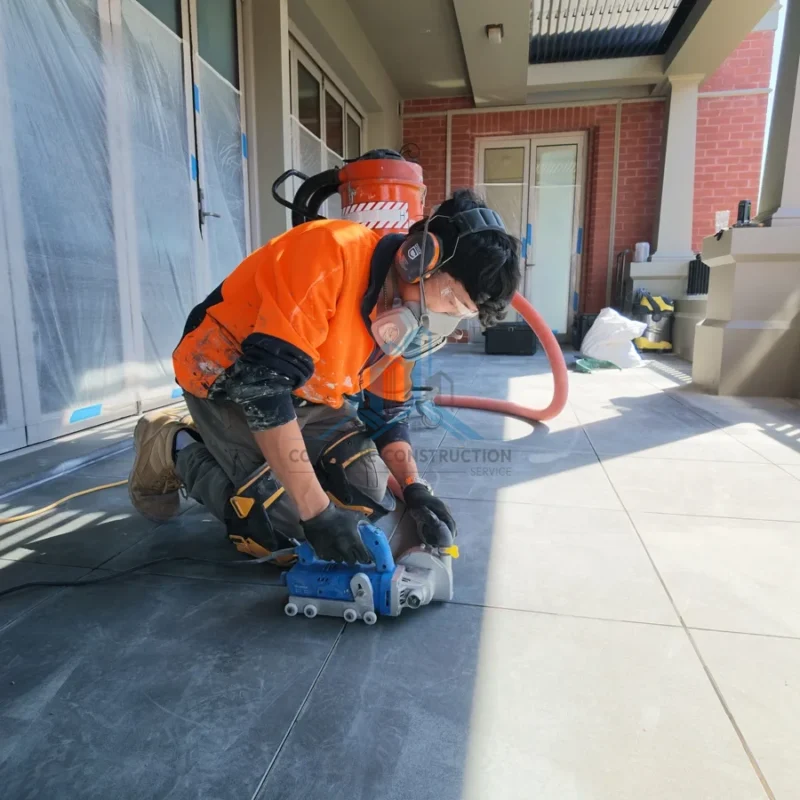
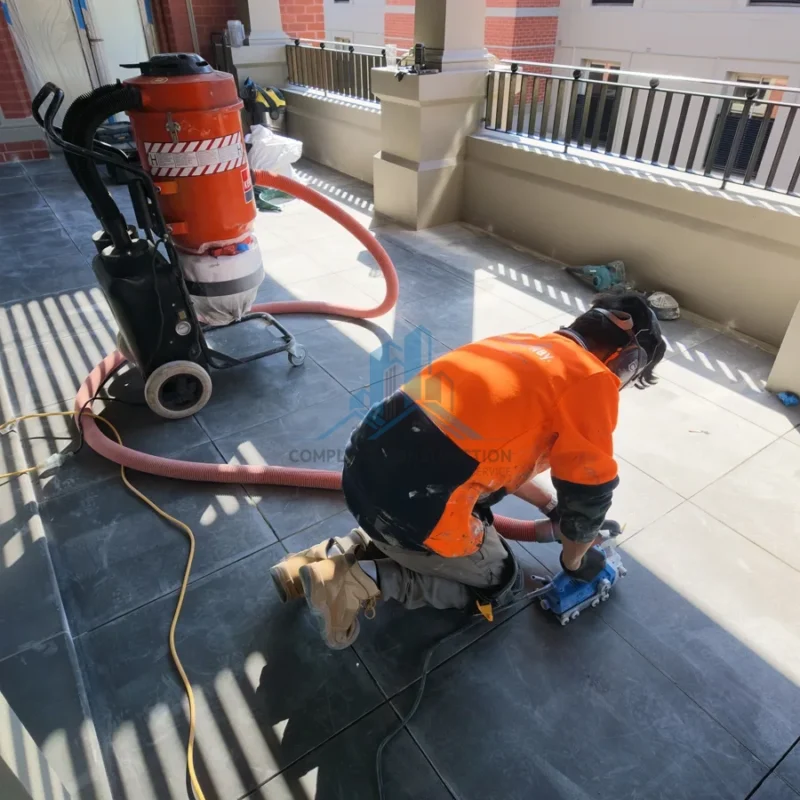
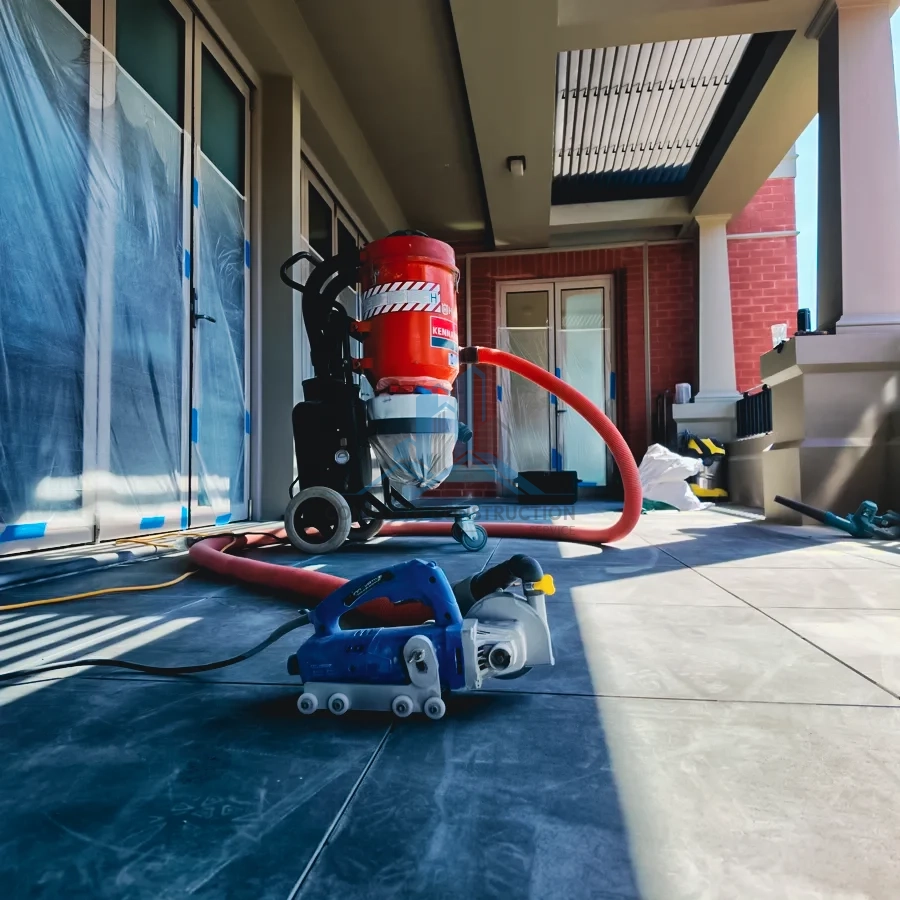
Blue edge grinder and a large red dust extractor sitting on a covered patio.

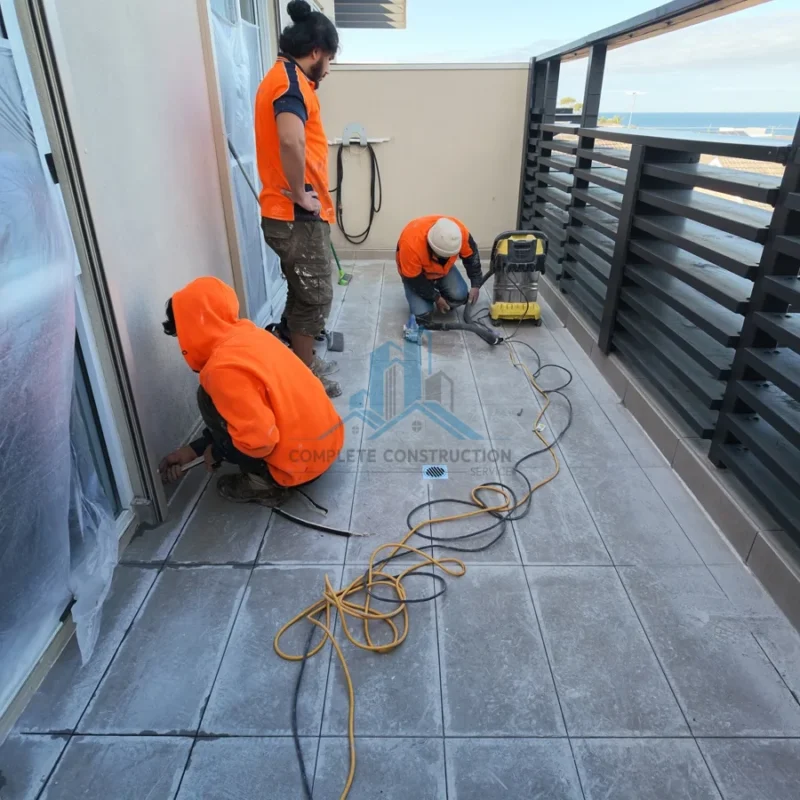
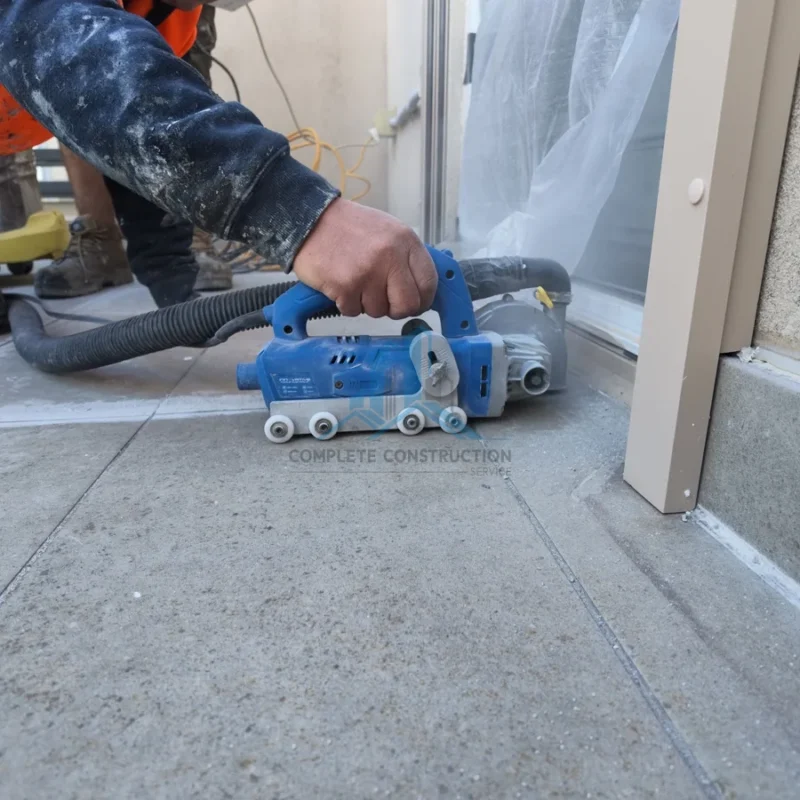
Professional grout removal machine with depth control

We use a professional electric grout removal machine with an adjustable depth-control guide, and we set the cutting depth before we start. On a tiled balcony or shower floor, that matters. It lets us:

keep the removal depth consistent along every joint
avoid cutting deeper than the grout needs
reduce the risk of touching the waterproofing membrane under the tiles
work tight between tiles with less chipping at the edges
leave cleaner joints for the new epoxy grout to grip

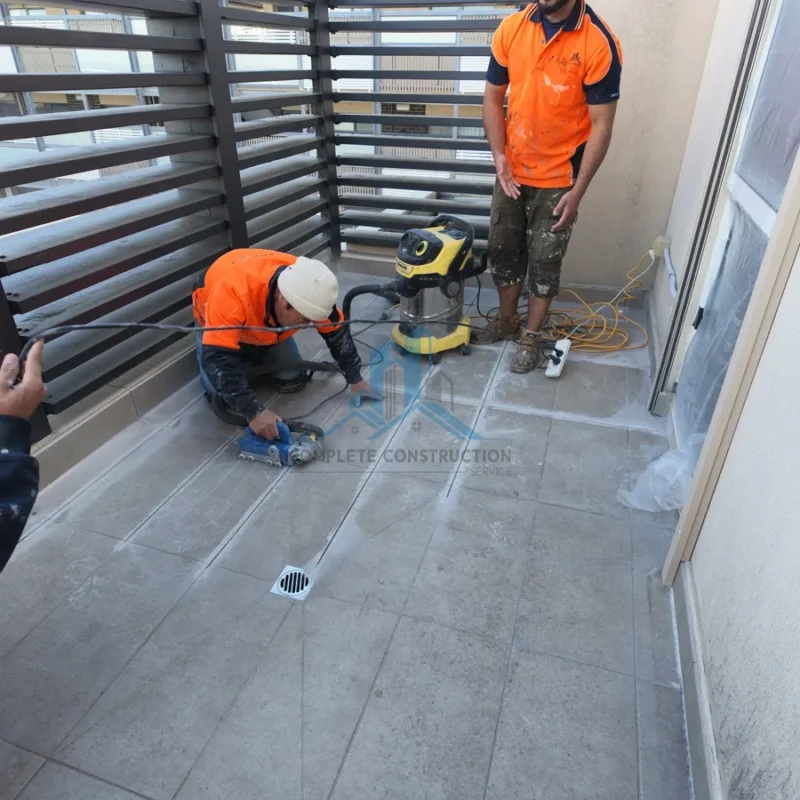
It runs with dust extraction, so the site stays far cleaner than hand grinding.

Epoxy grout

Dense, stain resistant and tough in wet areas. We pack every joint fully for a consistent, durable finish.

Efflock treatment

Mixed into the epoxy grout to reduce efflorescence and salt migration, so you get fewer white deposits and less staining through the joints.

Penetrating grout sealer

Applied after curing. It cuts water absorption, helps keep dirt and stains out and makes the grout easier to clean.

External-grade silicone

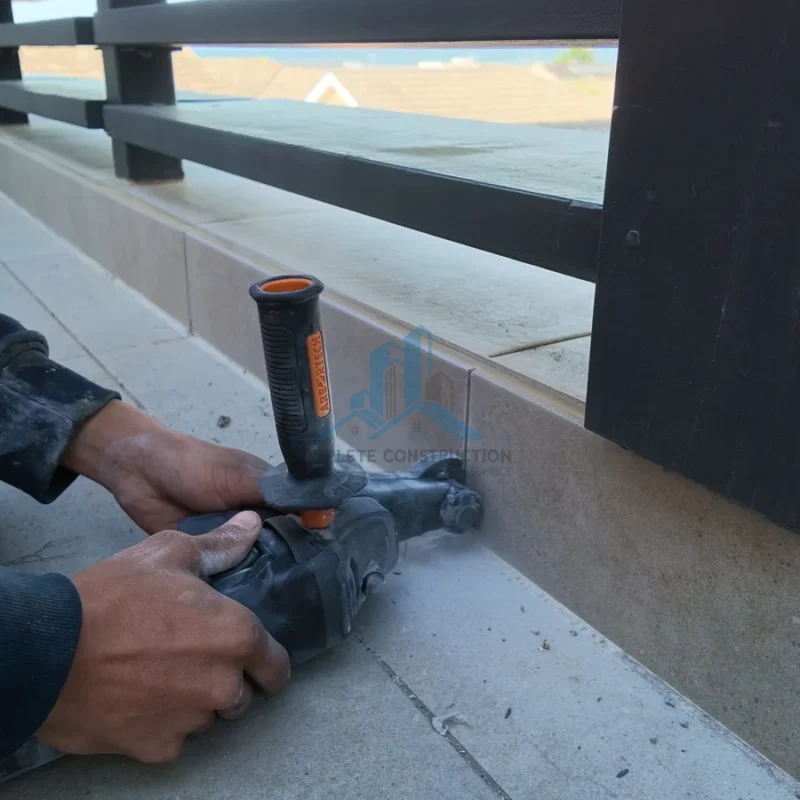
We strip the old silicone and replace it at edges, corners and wall-to-floor junctions, so movement joints stay flexible and sealed.

How We Work

Our tile regrouting process, step by step

This is the same sequence we put in writing in every scope of works, so you know what happens before we turn up.

01.

Inspect and protect

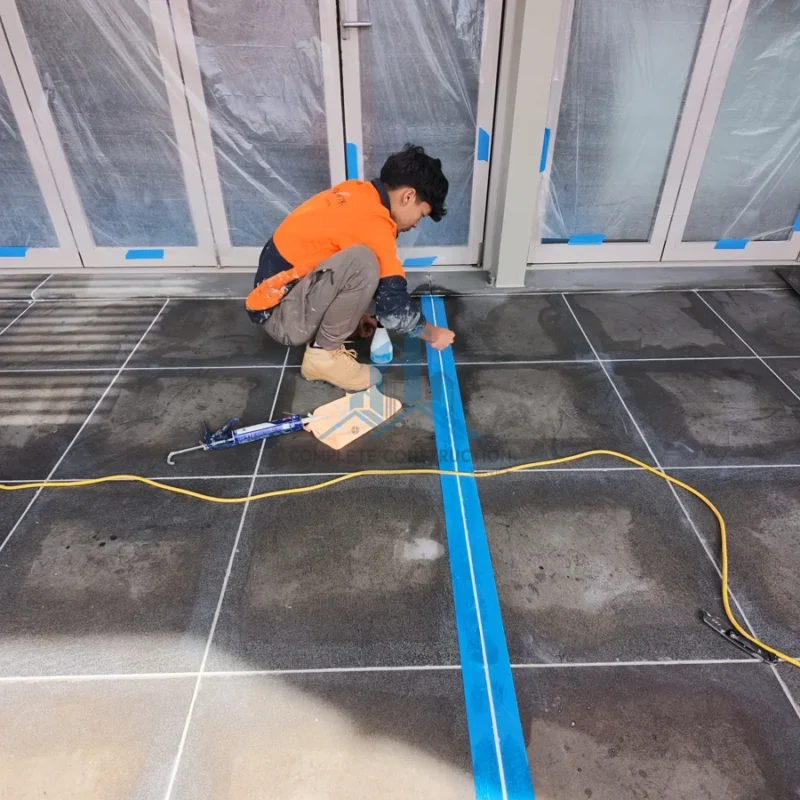
We inspect the grout, perimeter joints and silicone first. Then we mask and protect walls, doors, windows and anything not being worked on.

02.

Remove old grout and silicone

The grout machine cuts the old grout out to a controlled depth. All old silicone and sealant comes out of the edges and junctions.

03.

Vacuum and clean the joints

We vacuum every joint and edge, then clean off dust and residue. New grout won’t bond to a dirty joint.

04.

Epoxy regrout with Efflock

The epoxy grout is mixed to the manufacturer’s requirements with Efflock, packed into every joint, and the excess is cleaned off the tile surface as we go.

05.

Seal the grout

Once the grout has cured, we clean the lines and apply a penetrating sealer evenly, then let it cure properly.

06.

Silicone and final clean

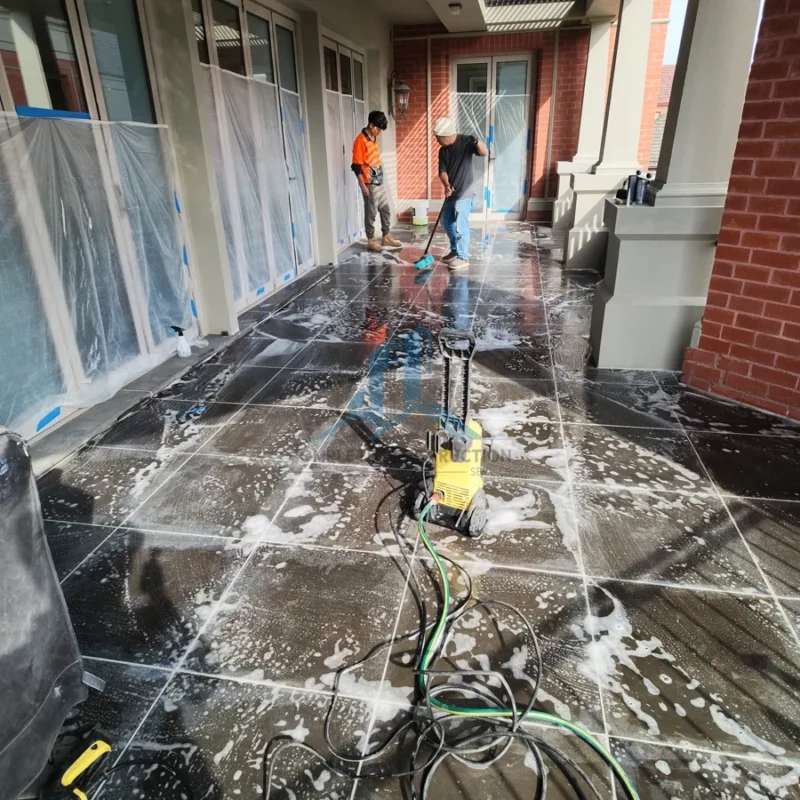
We apply flexible silicone at the edges and junctions, tool it neatly, then wash the tiles, remove grout haze and check every joint before we leave.

Straight talk on waterproofing. The membrane under your tiles is hidden, and we can’t confirm its depth or condition until the grout is out. Regrouting improves durability and moisture resistance at the joints, but it isn’t a membrane replacement. If we find defects, we tell you and quote any extra work separately. Cracked or drummy tiles and substrate repairs are also quoted separately.

Our Work

Tile regrouting projects across Melbourne

Browse our gallery of recently regrouting projects across Melbourne suburbs. Real projects, real results.

Pricing

Tile regrouting cost in Melbourne: what affects the price

We quote a fixed price for the scope we’ve agreed, and we put that scope in writing. Four things move the price most:

  • Area and joint length. More metres of grout line means more removal and more grout.
  • Grout condition and depth. Deep, hard or badly bonded grout takes longer to cut out.
  • Location. Balconies and outdoor areas need weather windows and longer curing times.
  • Extras. New silicone, grout sealing and wall coating are itemised, so you can see what you’re paying for.

Send photos and rough dimensions and we can usually give you a good idea quickly. Larger or more complex jobs get a site visit before we price them.

Where we work

Tile regrouting across Melbourne

We cover every Melbourne suburb, with crews regularly working in the south-east, bayside, inner city and the west.

Melbourne CBD, Cranbourne, Pakenham, Point Cook, Brighton, Parkdale, Richmond, Footscray, Carlton, Brunswick, Fitzroy, Werribee, South Yarra, Preston, Frankston, Narre Warren, and Docklands.

Not on the list? Call us. Homes, strata buildings and commercial spaces are all part of the work.
Contact us today at 1300 221 476

FAQ

Tile regrouting questions, answered

How long does tile regrouting take?

Most bathrooms take one to two days. A balcony like the one in our scope of works runs three to five days, depending on weather and curing times.

Will regrouting fix a leaking shower or balcony?

Regrouting improves moisture resistance at the joints, but it does not replace a failed waterproofing membrane. If we find membrane problems once the old grout is out, we report them and quote separately.

Why do you use epoxy grout?

Epoxy is dense, stain resistant and holds up in wet areas and outdoors, where cement grout tends to crack and absorb water.

What is Efflock?

Efflock is an additive we mix into the epoxy grout. It helps reduce efflorescence and salt migration, which cause white deposits and staining through grout joints.

Can you grind out grout without damaging my tiles?

Yes. We use an electric grout removal machine with an adjustable depth guide, so the cutting depth is set before we start. That keeps the cut consistent and cuts the risk of chipped tile edges.

Do you replace silicone as well?

Yes. We remove old silicone from edges and junctions, then apply new external-grade flexible silicone and tool it for a continuous seal.

Do I need to seal grout after regrouting?

We seal every job with a penetrating grout sealer after the grout cures. It reduces water absorption and staining and makes the joints easier to clean.

Which Melbourne suburbs do you cover?

All of them. We regularly work in Cranbourne, Pakenham, Dandenong, Point Cook and the bayside suburbs, and across inner Melbourne.

Don’t hesitate! Get in touch with us today.