

Efflorescence on Walls Causes and Removal
Discovering a mysterious chalky substance on your masonry can be alarming for any property owner. That strange white powder on the walls is an incredibly common issue known as efflorescence. While it might initially look like a minor cosmetic blemish, it is actually a visible warning sign of underlying moisture behaviour within your building materials.
At Complete Construction Service, we specialise in diagnosing and resolving structural moisture issues across Victoria. In this comprehensive efflorescence removal guide, Melbourne homeowners can use to protect their properties, we will break down the exact causes of efflorescence on walls, how to treat it and how to prevent it from returning.
What is Efflorescence on Walls? Explained
To put it simply, efflorescence is the migration of natural mineral salts to the surface of a porous material, where it forms an unsightly deposit. For this process to occur, three specific elements must be present simultaneously.
Soluble Salts: Natural minerals embedded deep within the brick, mortar, concrete or render.
Moisture: Water that penetrates the material and dissolves these internal salts.
A Path to Evaporate: Porous channels that allow the salt-laden water to travel to the outer surface, where the water evaporates, leaving the dry salt crystals behind.
When people ask what causes white powder to appear on walls, the answer is always a combination of these three factors. If you cut off the water source, the salt movement stops entirely.
Brick Wall Efflorescence vs Render Efflorescence Problems
Efflorescence presents itself differently depending on the exterior finish of your property.
Brick Wall Efflorescence
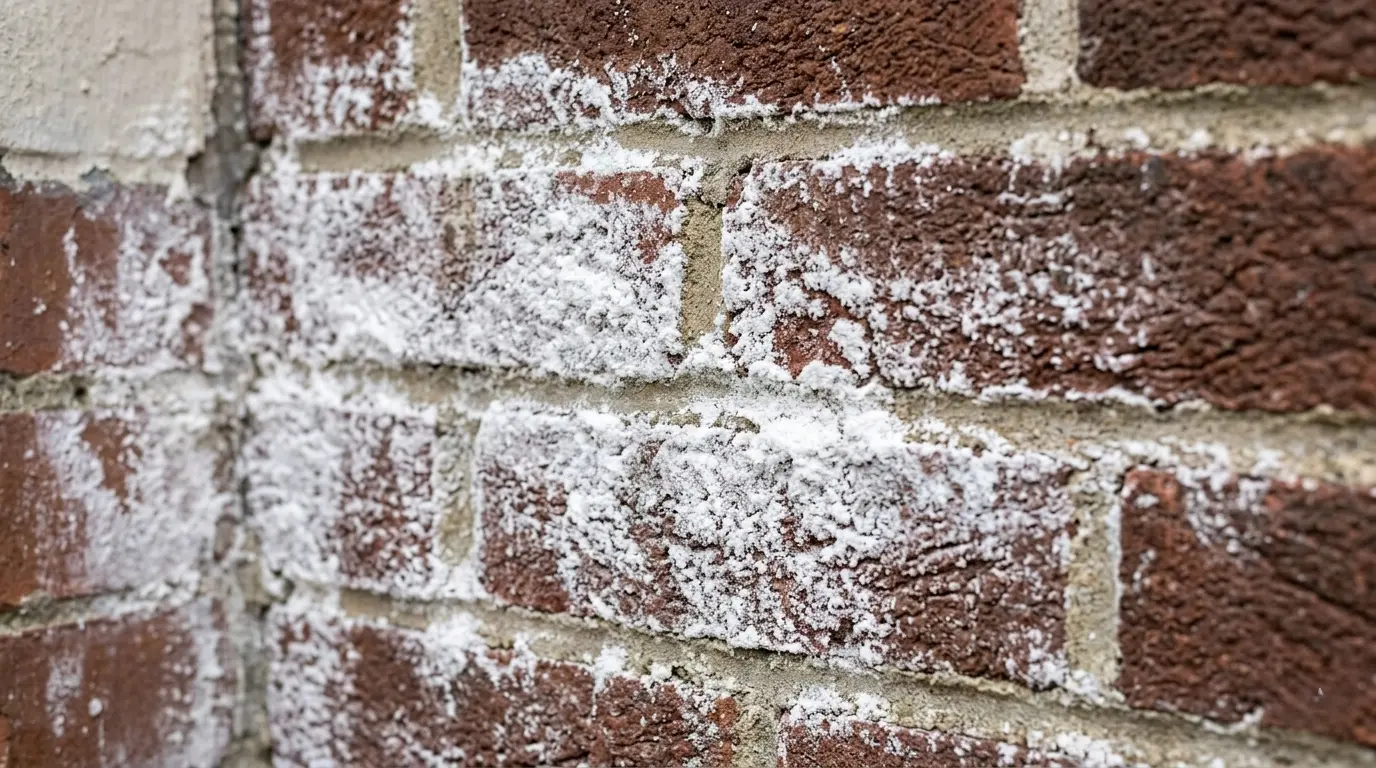
This is highly common in newer builds or older homes experiencing rising damp. You will notice a dusty white crust tracking along the mortar lines or blooming across the faces of the bricks. It occurs when rain or groundwater penetrates unsealed brickwork, dissolves the built-in salts, and draws them outward.
Render Efflorescence Problems
When efflorescence develops behind a plastered facade, it can cause severe render efflorescence problems. As the salt crystals expand underneath the smooth coating, they build up immense pressure. This pressure can cause the painted surface to bubble, lift, blister, and ultimately crack apart entirely, meaning efflorescence can damage rendered walls if left completely unmanaged.
Is Efflorescence Harmful to Walls?
On its own, the white salt powder is not toxic or inherently dangerous to touch. However, does efflorescence mean there is water damage lurking out of sight? Yes, it is a definitive indicator of uncontrolled water migration.
While the surface powder is harmless, a secondary process called subflorescence can occur. This happens when the salts crystallise inside the pores of the brick or stone rather than on the outside. Over time, this internal pressure can cause the masonry to crumble, spall and lose its structural integrity.
What is the Difference Between Mould and Efflorescence?
It is vital to distinguish between these two issues, so you can apply the correct treatment.
Efflorescence is mineral-based, completely odourless, dry and breaks down into a fine powder when rubbed. It will also dissolve instantly if sprayed with water.
Mould is a living fungus that thrives on moisture, smells distinctly musty, can be black, green or grey and will not dissolve in water.
Efflorescence Removal Melbourne Professional Methods
Simply scrubbing away the white patches with a wire brush is only a temporary fix. For lasting efflorescence removal, Melbourne specialists follow a strict multi-step restoration process.
Step 1 Dry Brushing
Before applying any liquids, as much of the dry salt crust as possible should be mechanically brushed off the wall and vacuumed away. Adding water prematurely can dissolve the salt back into the pores of the masonry, starting the cycle all over again
Step 2 Targeted Chemical Cleaning
For stubborn salt deposits, a specialised wall salt stain removal agent or a carefully diluted acidic solution is applied to break down the stubborn mineral bonds. This must be done with extreme care on rendered surfaces to avoid etching or burning the plaster finish.
Step 3 Neutralisation and Rinsing
The treated area is thoroughly rinsed with clean water to neutralise any chemical residues and extract the remaining loose salts from the surface level.
Wall Efflorescence Treatment and Prevention
The most important rule of removing salt deposits from walls is that cleaning alone is never enough, because the salts are built into the construction materials. Efflorescence can come back after cleaning if the moisture source remains active. Permanent prevention requires a strategic approach to moisture damage on walls.
Advanced Waterproofing for Efflorescence
Once the wall is completely dry, the ultimate goal is to seal the external surface while addressing any internal leaks or rising damp. This involves:
Fixing the Root Cause: Repairing broken downpipes, clearing blocked cavity weep holes or fixing faulty flashings that allow water into the wall cavity
Applying Breathable Sealers: Utilising premium hydrophobic sealers or high-performance elastomeric coatings. These advanced waterproofing for efflorescence treatments prevent external rainwater from entering the bricks while still allowing internal moisture vapor to escape harmlessly.
Partner with Complete Construction Service
Dealing with persistent salt stains requires a deep technical understanding of how building materials interact with moisture. For long-term results, a generic quick fix usually falls short,
At Complete Construction Service, we don’t just wash away the surface stains we investigate the exact entry points of the water. Whether you are dealing with a fresh breakout on a new extension or historical salt damage on an older property, our experienced team uses trade-grade equipment and premium breathable membranes to protect your investment.
Contact Complete Construction Service today for a professional assessment and find the permanent wall efflorescence treatment your property needs.