

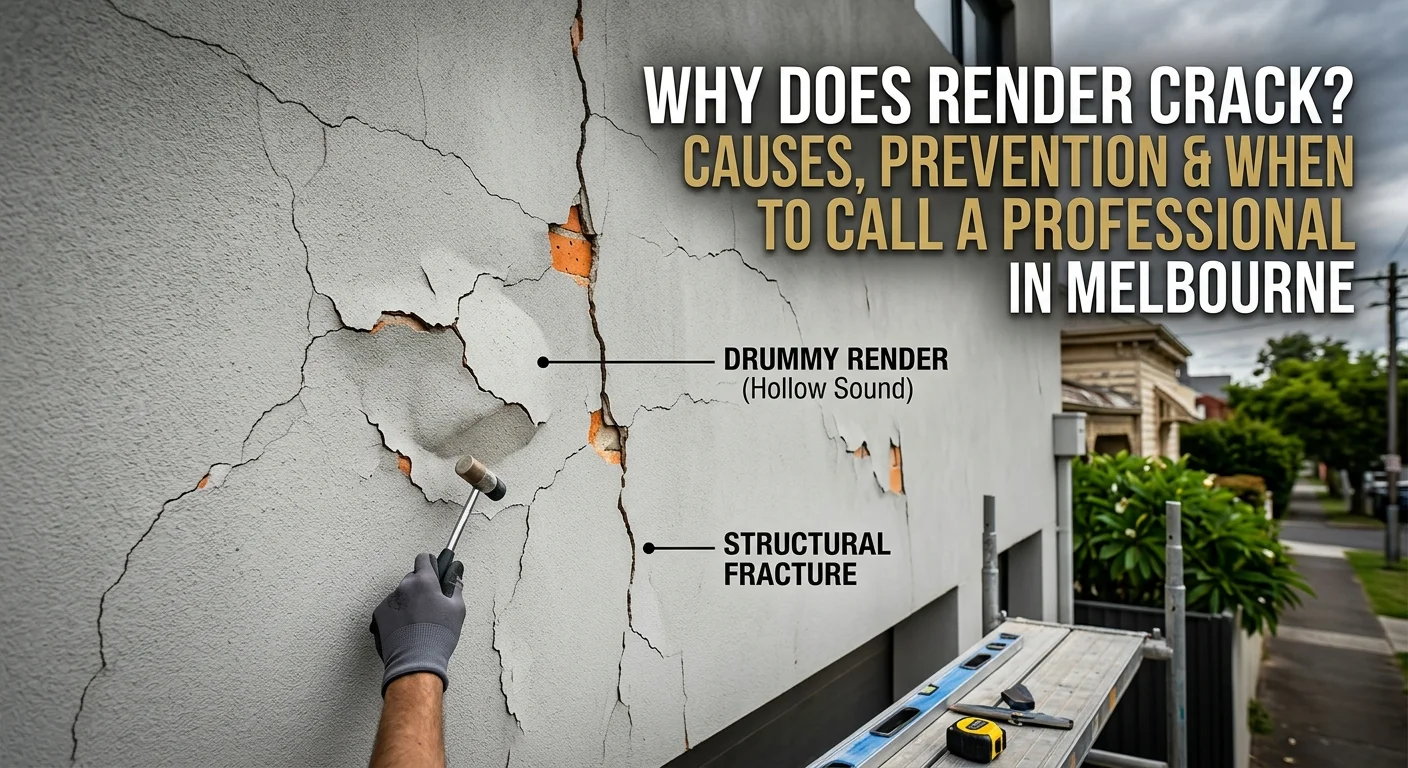
Why Does Render Crack? Causes, Prevention & When to Call a Professional in Melbourne
An exterior rendered finish provides a sleek, modern aesthetic that instantly boosts the street appeal and market value of any property. However, maintaining that immaculate look requires an understanding of how external coatings interact with environmental elements. Discovering fine lines or fractures creeping across your facade can be incredibly frustrating.
If you notice your exterior walls deteriorating, you are likely asking: why does render crack Melbourne wide, and is it a sign of deeper structural issues?
At Complete Construction Service, we specialise in diagnosing, managing, and rectifying structural external surfaces. In this guide, we break down the leading render cracking Melbourne causes, explain how to identify failures like blown or drummy surfaces, and map out the best prevention strategies to keep your home looking pristine.
Understanding the Culprits: Render Cracking Melbourne Causes
Render does not fail without a reason. Because it acts as a rigid protective envelope over your home, any movement, moisture shift, or chemical reaction underneath will force the surface coating to split.
The primary factors driving deterioration across Victoria include:
1. Extreme Temperature Fluctuations (Thermal Movement)
Melbourne’s infamous four seasons in one day weather places immense thermal stress on building materials. When a wall faces harsh afternoon sun and then cools rapidly overnight, the brickwork and the render expand and contract at completely different rates. If the original coating lacks flexibility, this continuous structural tug-of-war results in fine stress fractures.
2. Highly Reactive Clay Soils
Soil composition plays a massive role in external masonry health. Many residential zones, particularly across Melbourne’s outer eastern suburbs, are built on highly reactive clay soils. This type of ground behaves like a sponge: it swells heavily during wet winter months and shrinks drastically during dry summer periods. This seasonal shifting causes subtle foundation movement, transferring immense pressure up through the brickwork and splitting the rigid exterior plaster.
3. Poor Mixing Ratios and Rapid Drying
Often, the root cause traces back to render cracking after application, which Melbourne teams see due to rushed workmanship. If a cement-to-sand ratio is off, or if the plaster is applied during an extreme 30°C+ summer day with hot northerly winds, the water within the mix evaporates far too quickly. This premature drying disrupts the chemical hydration process, causing severe shrinkage cracks before the product has even fully cured.
How to Spot Serious Damage: Blown and Drummy Render
Not all wall fractures are created equal. Understanding the difference between a superficial cosmetic blemish and a total bonding failure is key to protecting your brickwork.
+———————————————————————–+
| DIAGNOSING RENDER SURFACES |
+———————————————————————–+
| Hairline Crack (<1mm) –> Standard drying shrinkage or thermal shift.|
| |
| Drummy Render –> Hollow sound when tapped; pocket of air. |
| |
| Blown Render –> Visible bubbling, bulging, or splitting. |
+———————————————————————–+
What is Drummy Render?
If you tap your knuckles against a cracked section of your wall and it produces a distinct, hollow sound, you are dealing with drummy render Melbourne builders categorise as detached. This hollow sound indicates that the internal plaster layer has completely detached from the underlying brickwork or block substrate, creating an isolated pocket of trapped air.
What is Blown Render?
When drummy sections are left unaddressed, they inevitably progress to blown render, Melbourne weather exacerbates. Rainwater enters through fine capillaries, gets trapped behind the detached layer, and expands during temperature shifts. This internal pressure forces the plaster to visibly bubble, bulge, fracture, and eventually break away from the property entirely.
How to Prevent Render Cracking in Melbourne Homes
The most effective way to address external masonry damage is to implement correct engineering and application techniques from the very beginning. To prevent render cracking, Melbourne homes must utilise the following protective measures:
Incorporate Strategic Movement Joints:
Large expanses of masonry require deliberate control joints. Installing flexible expansion tracks allows separate sections of the wall to expand and contract independently without cracking the surrounding plaster.
Embed Structural Reinforcement Mesh:
Laying an alkalized fibreglass mesh over high-stress transition zones, such as the corners of windows, doors, and junctions between different building materials, distributes localised stress evenly.
Select Climate-Appropriate Materials:
While traditional sand and cement mixtures are highly affordable, polymer-modified acrylic or flexible silicone-based renders are much better suited to volatile climates. These advanced systems retain a degree of elasticity, allowing them to bend and flex alongside natural building movements.
Control the Curing Speed:
Render must harden slowly and evenly. Professional installers pre-wet dry brick substrates to control suction and lightly mist newly rendered surfaces with water over several days to ensure optimal structural strength.
FAQs:
Is a hairline crack in the render serious?
A fine hairline crack (under 1mm in width) is generally cosmetic and caused by standard drying shrinkage or minor thermal shifts. However, it should never be completely ignored. These tiny fractures act as pathways for moisture. It is always highly recommended to address and seal these minor cracks before painting your home to prevent water from tracking deeper into the substrate.
How much does render crack repair cost in Melbourne?
For minor restoration works, full cosmetic treatments typically range between $15 and $30 per square metre for comprehensive surface patching and elastomeric membrane protection. If large, unstable panels have completely failed or blown, the affected sections must be entirely stripped back to the base brickwork and re-rendered, which will increase project costs depending on height accessibility and scaffolding needs.
Can I repair cracked render myself?
If you are dealing with a minor, isolated hairline split on a ground-level wall, a capable homeowner can patch it using a flexible, external rendering compound. However, trying to tackle widespread damage, damaged panels, or structural cracks without trade training is highly risky. Mismatched textures leave highly visible, patchy sections, and using the wrong patch compound can trap moisture, accelerating internal damage.
Restore Your Home’s Structural Protection with Complete Construction Service
A cracked exterior is rarely just a cosmetic issue; it represents a broken barrier that leaves your property vulnerable to internal dampness, efflorescence, and structural timber decay.
At Complete Construction Service, our licensed trade professionals carry out meticulous, structurally sound render repair Melbourne homeowners trust. We systematically inspect your external walls to determine the exact root cause of the movement. From minor V-profile crack grinding and specialised mesh embedding through to full-blown plaster replacement, we ensure your exterior is robust, perfectly textured, and thoroughly sealed against the elements.
Contact Complete Construction Service today to speak with a local structural specialist and book your on-site facade inspection.