

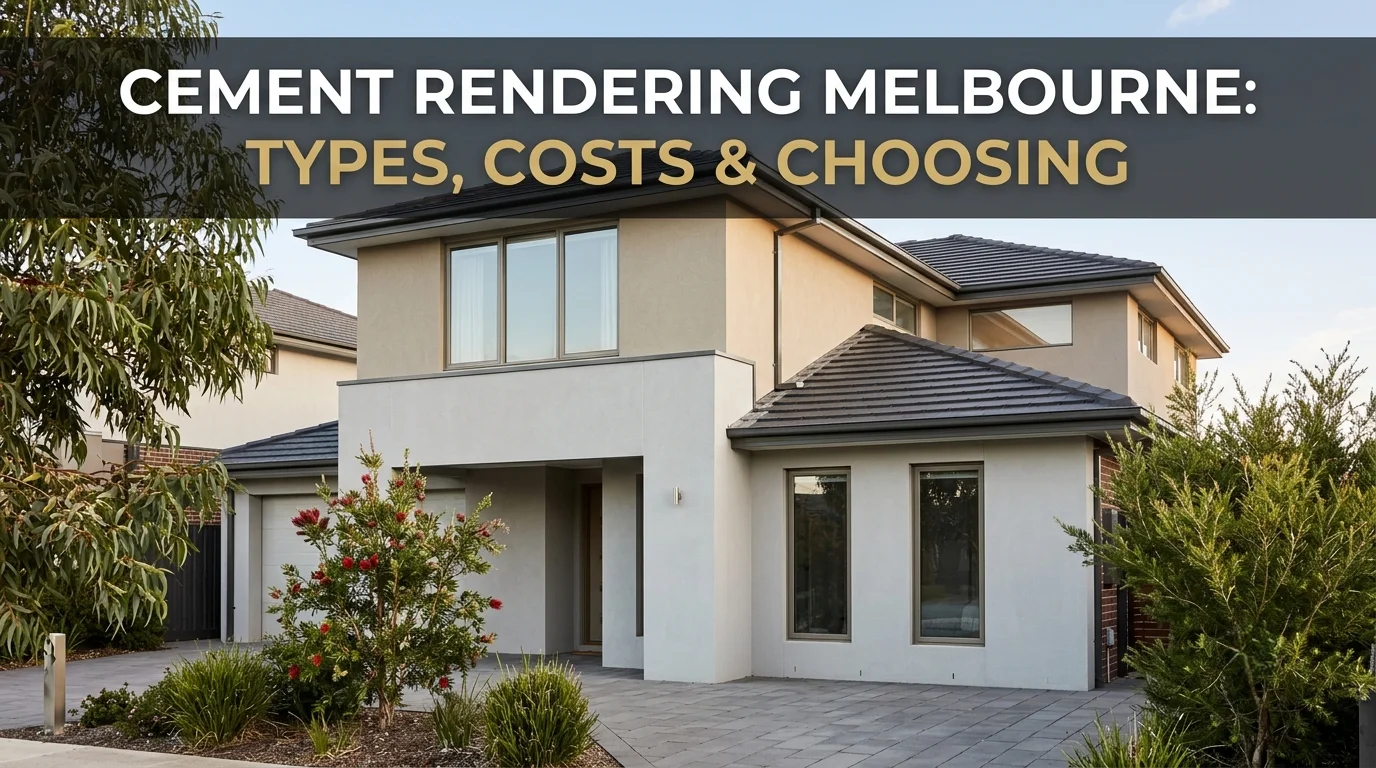
Cement Rendering Melbourne Types Costs How to Choose the Right Render for Your Home
Transforming the exterior of a property is one of the quickest ways to elevate its street appeal and protect its underlying structure from harsh environmental conditions. Whether you are looking to update a dated brick facade, patch up worn masonry, or add significant market value to your property, external wall finishing plays a crucial role. A common question property owners face is how to choose render for Melbourne homes that will withstand the local climate while fitting within a realistic budget.
At Complete Construction Service, we provide premium rendering services Melbourne residents can depend on for lasting structural durability and exceptional aesthetic finishes. In this complete guide, we break down the primary types of render available, the typical cost expectations across Victoria, and how to identify when your current exterior needs professional care.
What Type of Rendering Is Best for Melbourne Homes?
The unique and highly variable local climate demands external finishes that can handle rapid temperature shifts and intense seasonal downpours. Understanding the technical differences between traditional and modern compounds is essential before starting your renovation project.
Traditional Cement Rendering
Standard cement rendering relies on a robust, site-mixed blend of washed sand, cement, and lime. It provides a dense, highly rigid defensive shell over porous clay bricks, concrete blocks, or structural stone blocks. It is highly favoured for its exceptional impact resistance and cost-effectiveness, making it an excellent choice for straightforward external wall rendering Melbourne projects. However, because it cures into a completely solid, rigid mass, it lacks structural elasticity. If your home experiences minor foundation shifting or thermal expansion during extreme weather, fine surface cracks can eventually appear.
Modern Acrylic Rendering Melbourne Wide
If you are evaluating cement vs acrylic render for Melbourne climate performance, acrylic mixtures offer immense structural advantages. Acrylic rendering incorporates flexible plastic polymers directly into the wet mix. This composition gives the cured finish superior flexibility, allowing the outer coating to subtly expand and contract along with the natural thermal movements of the building envelope. Acrylic systems can be applied across a much wider variety of modern building substrates, including blueboard, expanded polystyrene panels, and pre-painted brickwork. Furthermore, it offers excellent water resistance and can be tinted to a specific colour palette, reducing the long-term need for external painting.
How Much Does House Rendering Cost in Melbourne?
Project budgeting is an essential step for any property upgrade. When calculating your projected house rendering cost Melbourne-wide, pricing typically depends on the total square meters of wall surface, the complexity of multi-level scaffolding requirements, and the specific type of material used.
For a standard single-story brick property, utilising a traditional sand and cement mix costs generally range from forty-five to seventy dollars per square meter. Switching to premium polymer-modified materials or advanced acrylic systems generally increases the investment by between seventy-five and one hundred and ten dollars per square meter.
For a complete breakdown of a typical scenario of how much it costs to render a house in Melbourne, a standard three-bedroom suburban house usually totals between nine thousand and fifteen thousand dollars, depending entirely on the total facade surface area and layout intricacy. While the upfront investment is notable, high-quality rendering significantly improves thermal insulation, property durability, and aesthetic appeal, which drastically improves the overall value of your asset in the local property market.
Longevity, Maintenance, and Repair Strategies
Investing in professional wall finishes means you want your property to remain pristine and weatherproof for decades to come, without constant upkeep.
How Long Does Rendering Last in Melbourne?
When applied by experienced tradespeople over a structurally sound and clean substrate, a traditional cement finish can reliably last between fifteen and twenty years. Advanced polymer and acrylic systems often extend past twenty-five years with minimal maintenance. Needs for early intervention usually occur only if moisture gets trapped behind the coating or if the property suffers from serious foundational settling.
Identifying Signs That Need to Be Replaced on My Melbourne Home
Property owners must watch out for the early warning signs of exterior wall degradation:
- Fine hairline cracks or deep structural fractures splitting across the facade.
- A hollow, drumming sound when tapping gently on the wall surface, indicating the render has completely separated from the brickwork underneath.
- Visible damp patches, chalky white salt deposits, or bubbling paint finishes.
- Flaking chunks of render breaking away from base corners.
If you notice these issues, you might ask: Can I render over old, cracked render in Melbourne? The answer is no. Applying a fresh layer directly over a failing, crumbling coat will only cause the new layer to detach as well. A permanent fix requires targeted render repair Melbourne interventions where the damaged sections are ground away down to the raw masonry base, walls are prepared correctly, and a fresh, stable coat is seamlessly blended into the surrounding area.
Timeline and Post-Application Care
Achieving a flawless, long-lasting finish requires adhering to strict material curing timelines.
A frequent technical question we receive is: Can you paint over cement render immediately after application? The answer is a definitive no. Traditional cement coatings require a full 28 days to fully cure and reach their peak structural strength. Painting too early traps deep moisture inside the wet mix, causing the new paint film to bubble, peel, and fail; premature alkaline breakdown will also ruin the paint finish. Acrylic renders, on the other hand, cure much faster and can often receive top coats within just a few days of application.
Partner with Complete Construction Service
Achieving a perfectly straight, durable external wall finish requires extensive trade expertise, precise mixing ratios, and proper tool mastery. A rushed application or poor surface preparation will inevitably lead to cracking and premature delamination.
At Complete Construction Service, we understand the intricacies of local soil conditions, climate pressures, and building regulations across Victoria. Our experienced teams meticulously prepare your structural substrate, ensuring your new external render forms an unbreakable bond that protects your home for decades to come.
Contact Complete Construction Service today to speak with an expert and arrange a professional facade assessment for your home.