

Whether you are updating a kitchen splashback, laying down durable entryway floors, or undertaking a full bathroom transformation, understanding the financial side of surface installations is essential. Tiling is an investment that influences both the aesthetics and structural longevity of your property. However, navigating industry quotes can feel overwhelming when pricing models vary significantly across Victoria.
At Complete Construction Service, we believe in absolute transparency when it comes to property improvements. In this guide, we break down the current market rates for 2026, analyse the core variables that shape your estimates, and explain what to look for when hiring a professional installer.
Understanding the Average Tiling Cost Melbourne Wide
When planning a project, the most common starting point is calculating the structural surface area. Property owners frequently ask: how much does tiling cost per square metre Melbourne-wide?
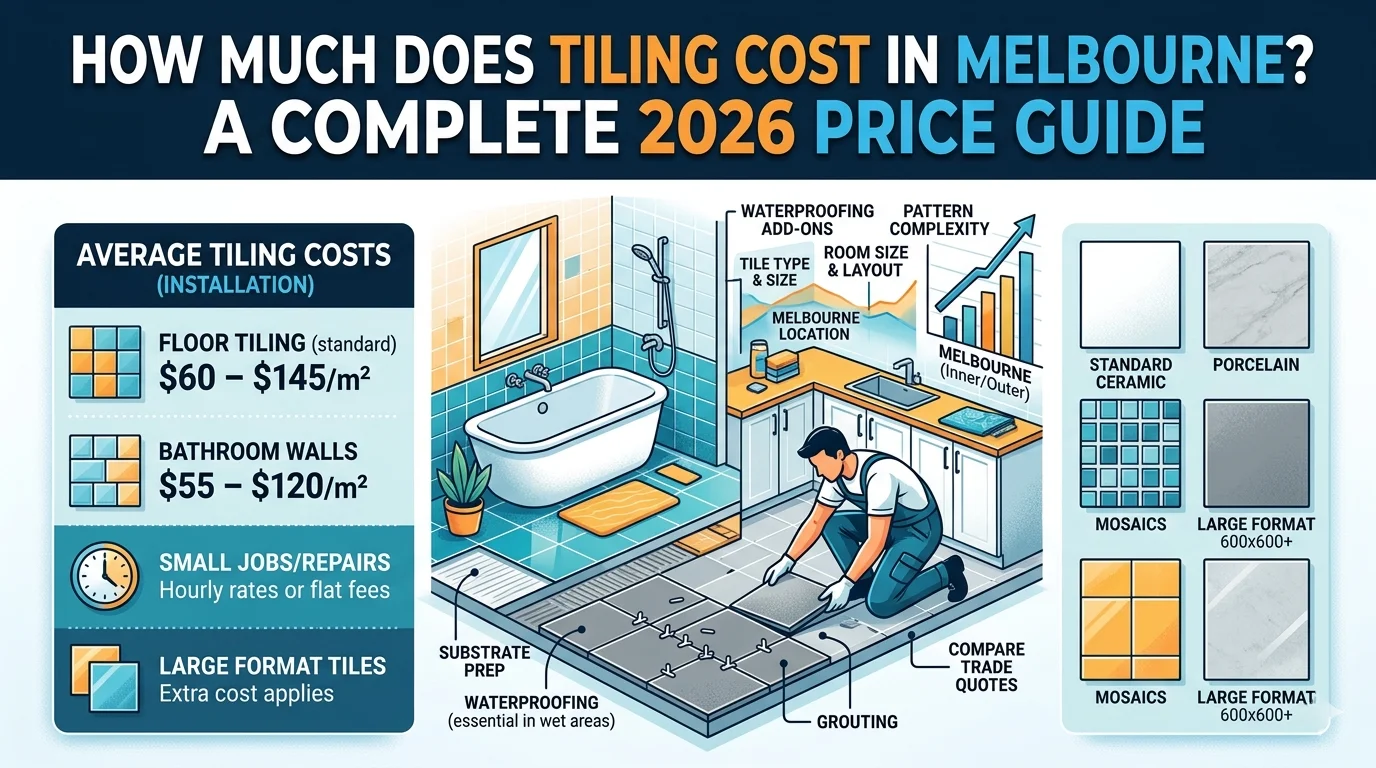
In 2026, standard market pricing for straightforward floor installations typically ranges from $60 to $145 per square metre installed. For vertical surfaces, a standard wall tiling price Melbourne benchmark sits between $55 and $120 per square metre. These base figures cover professional layout preparation, adhesive application, tile placement, and grouting.
Hourly Rates vs. Square Metre Pricing
While square metre configurations are the industry standard for large, open spaces, small or intricate projects are calculated differently. The average Melbourne tiler rates per hour range between $45 and $95 per hour. Hourly configurations are generally applied to highly detailed work, such as fixing a localised splashback, executing intricate mosaic borders, or handling tight powder rooms where mechanical cutting takes up more time than actual tile laying.
The Realities of a Bathroom Refresh: What to Expect
Wet areas require a much higher level of technical preparation than dry living zones, which naturally affects the overall price. If you are trying to determine how much to retile a bathroom, Melbourne specialists generally price a standard 6–10m² bathroom installation between $2,500 and $7,000 in 2026.
This comprehensive bathroom tiling cost Melbourne 2026 bracket includes old surface removal, substrate levelling, structural waterproofing, tile supply, and final joint grouting.
+-----------------------------------------------------------------------+
|                       BATHROOM TILING COST FACTORS                    |
+-----------------------------------------------------------------------+
|  [ Surface Prep ] ---> [ Waterproofing ] ---> [ Tile Layout & Cuts ]  |
|   ($30-$70/m²)             ($37-$84/m²)            ($55-$145/m²)      |
+-----------------------------------------------------------------------+
The Essential Waterproofing Layer
A common mistake when comparing trade estimates is assuming every critical task is automatically wrapped into a single figure. Property owners often ask: ” Is waterproofing included in a Melbourne tiling quote? Not always.
Wet areas like showers and laundries legally require AS 3740-compliant moisture barriers. Professional waterproofing application typically adds an extra $37 to $84 per square metre to your project budget and is frequently listed as a separate line item to ensure compliance certification.
Key Variables That Shape Your Tiling Estimate
If you have collected multiple trade assessments, you might wonder why the final figures look so vastly different. Several key factors drive these adjustments:
1. Tile Dimensions and Formats
The physical scale of your material changes the labour required to set it. For instance, floor tiling cost Melbourne estimates rise when dealing with large-format tiles (600×600mm and above). These substantial pieces cost roughly $80 to $130 per square metre to install, representing a 15–25% price increase over standard sizes. Large tiles require perfectly flat substrates, specialised lifting tools, and precision mechanical cutting to avoid cracks. Conversely, ultra-small mosaic sheets or subway tiles also increase costs due to the meticulous alignment required.
2. Layout Patterns and Waste Factors
A standard grid or brick-bond layout is highly cost-effective because it generates minimal product waste. However, if you choose an intricate herringbone, chevron, or diagonal layout, expect your labour fees to rise. These complex geometric patterns require extensive hand-cutting along every boundary wall, increasing layout hours and boosting your material waste calculation from a standard 10% up to 15 or 20%.
3. Substrate Condition and Levelling
Tilers cannot lay straight surfaces over warped, bouncy, or cracked bases. If your older subfloor is uneven, technicians must first apply a self-levelling liquid screed compound or install fibre-cement underlay sheets. Skipping this critical structural phase causes tiles to lip, grout lines to fracture, and tiles to eventually pop under foot traffic.
4. Geographic Location and Site Access
Your physical address in Victoria plays a subtle role in pricing. Central inner suburbs like Fitzroy, Richmond, and South Yarra often command premium rates due to tight street parking, complex multi-story material transport, and high local demand. On the other hand, projects in outer suburban areas often cost 10–20% less due to easier site access and lower transit overheads.
Smart Budgeting: Should You Supply Your Own Materials?
To manage expenses, many owners choose to purchase their porcelain or ceramic tiles directly from wholesale showrooms. While supplying your own materials allows you to control product costs, it rarely reduces the tiler’s base labour rate.
When managing a project independently, we highly recommend gathering three independent professional quotes. When evaluating these proposals, look beyond the final bottom-line number. Verify that the breakdown explicitly covers subfloor preparation, old material disposal fees, grout sealing, and compliant waterproofing certificates.
Secure Flawless Craftsmanship with Complete Construction Service
Choosing the cheapest available quote often leads to uneven grout joints, poor drainage, and compromised waterproofing layers that hide structural rot beneath your floors.
At Complete Construction Service, we do not cut corners. Our experienced team provides fully itemised, highly competitive pricing structures for residential and commercial spaces across Melbourne. We utilise premium trade adhesives, exact levelling systems, and certified moisture-management techniques to ensure your stone, porcelain, or ceramic finishes remain structurally secure for decades.
Contact Complete Construction Service today to speak with our local specialists and secure a precise, transparent quote for your next project.