

Polished Concrete vs Screeding: Which is Better
Selecting the right foundational base and surface finish is one of the most critical decisions during a residential build or commercial renovation. The choice fundamentally dictates the interior aesthetic, structural durability and long-term maintenance requirements of the property. Two of the most frequently discussed methods in modern construction are mechanical polishing and cementitious base preparation, leading to a common debate: polished concrete vs screeding.
While these terms are sometimes used interchangeably in casual conversation, they serve entirely different structural purposes and offer distinct visual results. At Complete Construction Service, we specialise in delivering both high-end architectural finishes and robust subfloor preparation systems across Victoria. To help you determine the ideal approach for your project, this residential polished concrete guide breaks down the functional differences, performance variations and cost factors of each method.
Understanding the Basics: Polished Concrete vs Screed Flooring Explained
To make an informed decision, you must first understand the core engineering and design purposes behind these two distinct concrete floor finishes.
What is Polished Concrete?
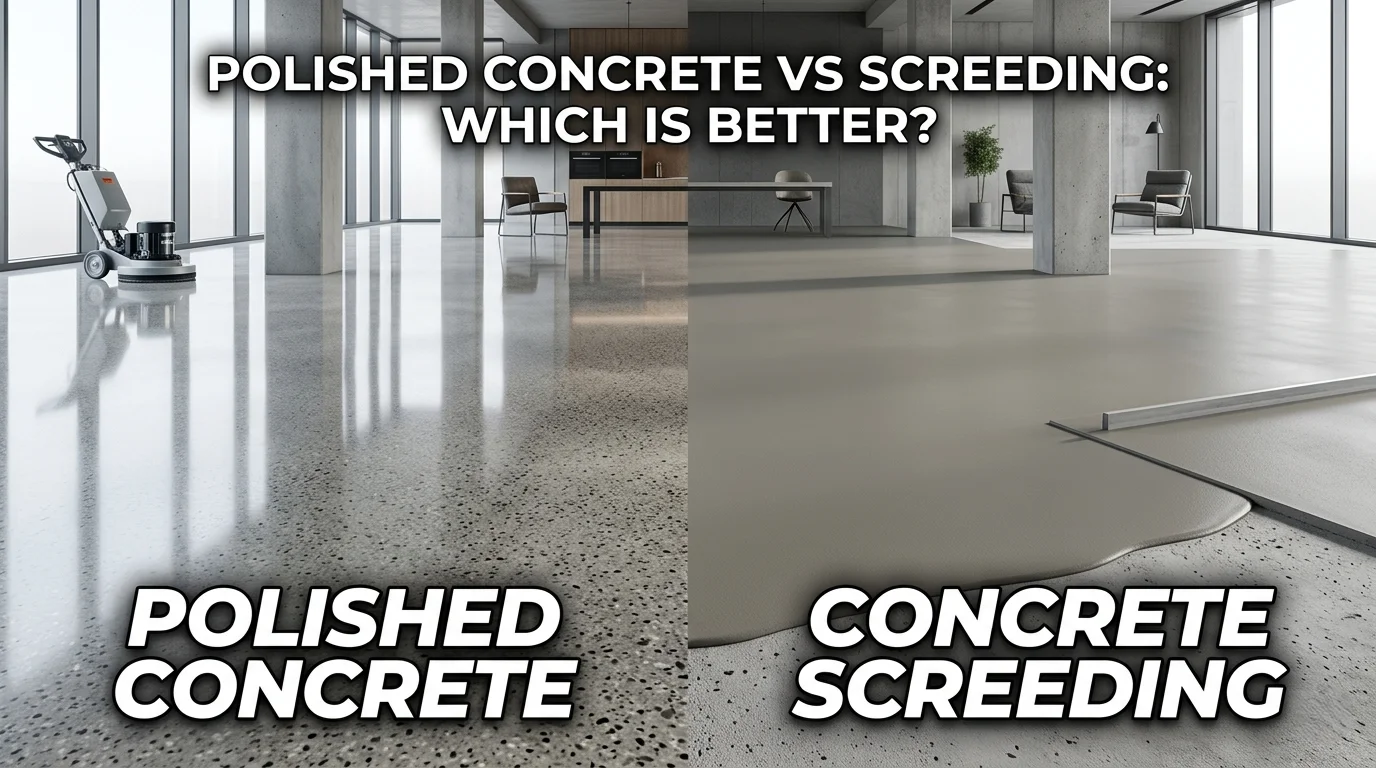
Polished concrete is a standalone architectural floor finishing system. It is created by taking an existing or newly poured structural concrete substrate and processing it with heavy-duty grinding machinery fitted with industrial diamond abrasive discs. The process involves a sequence of grinding, honing and chemical densifying followed by mechanical polishing to achieve a highly reflective, durable surface. It can range from a matte industrial look to high-glossy concrete surfaces with varying levels of an exposed aggregate finish.
What is Concrete Screeding Used For?
Unlike a polished finish, a traditional cementitious screed is not typically designed to be the final visible floor surface. Instead, floor screeding solutions involve applying a precise blend of cement, sand and water over a structural concrete base to achieve a perfectly flat level and engineered surface. This process is essential for surface levelling, establishing correct falls for water drainage in wet areas or encapsulating underfloor heating pipes. Once cured, the screed serves as the flawless subfloor foundation required to install traditional decorative coverings such as engineered timber, luxury vinyl, porcelain tiles or carpet.
Is Polished Concrete Better Than Screeding?
Determining which option is superior depends entirely on whether you are seeking a striking minimalist finish or preparing a flat base for alternative flooring materials.
Visual Appeal and Modern Industrial Flooring Ideas
If you want to achieve a seamless modern industrial aesthetic, polished concrete for homes is highly superior. It eliminates the need for grout lines, creating an expansive, uninterrupted visual flow that reflects natural light beautifully. It is one of the leading decorative concrete flooring trends due to its ability to blend raw structural elements with refined minimalist luxury.
Conversely, standard screeding is a utility layer designed to be hidden completely beneath other materials. However, if you are asking, can screeding be used as a finished floor surface? Specialised polymer-modified systems and self-levelling screed Melbourne applications can occasionally be sealed or tinted for an industrial look, but they lack the depth, lustre, and structural hardness of true mechanically polished concrete.
Levelling and Structural Correction
When it comes to correcting a warped, unlevel, or damaged structural slab, concrete screeding Melbourne applications are indispensable. Mechanical polishing cannot fix major structural slopes or dips; it simply follows the contours of the existing slab. A precisely applied screed can flatten an uneven floor perfectly, providing the essential flat plane needed for flawless secondary floor installations.
Durability Maintenance and Longevity Performance
When investing in property infrastructure, long-term performance is just as critical as the upfront visual appeal
Which Flooring Option is More Durable?
When comparing polished concrete durability to traditional floor coverings installed over screeds, polished concrete is the clear winner. Because it utilises the actual structural slab hardened with chemical densifiers, it is practically impervious to heavy foot traffic impact and scratches. It will not chip, warp, or delaminate like timber or vinyl, making it the premier choice for heavy-duty commercial concrete flooring as well as busy residential spaces.
Maintenance Requirements
Property owners regularly ask whether polished concrete requires maintenance. While it is incredibly low-maintenance, it is not completely maintenance-free. To retain its high clarity shine, it requires simple routine sweeping and damp mopping with a pH-neutral cleaner. It never requires waxing, stripping or resealing. If properly cared for, polished concrete flooring Melbourne installations can easily last upwards of 20 to 30 years before requiring a light re-buffing, making it one of the most durable flooring materials available today.
Cost Considerations in the Melbourne Market
When analysing a polished concrete cost guide, Melbourne–wide project managers must weigh immediate installation expenses against long-term lifecycle value.
The initial upfront cost of mechanical polishing is typically higher than pouring a basic sand and cement screed. This is due to the intensive multi-stage labour machinery costs and diamond tooling required to grind and refine the concrete face.
However, because polished concrete eliminates the ongoing need to purchase and install secondary floor coverings like premium tiles or hardwood timber, the total project cost often balances out over time. Furthermore, when you factor in the absolute longevity and minimal maintenance requirements, polished concrete represents an incredibly cost-effective long-term investment for modern developments.
Partner with Complete Construction Service
Choosing between these screed flooring systems and polished finishes requires an expert assessment of your existing slab quality, architectural goals and budget limits. At Complete Construction Service, we provide clear technical guidance and flawless execution across both disciplines. Whether you require precise self-levelling compounds to prepare a subfloor or a flawless, premium, polished finish that showcases beautiful stone exposure, our team delivers exceptional craftsmanship backed by structural integrity.
Contact Complete Construction Service today to discuss your project requirements and receive a comprehensive professional consultation.