

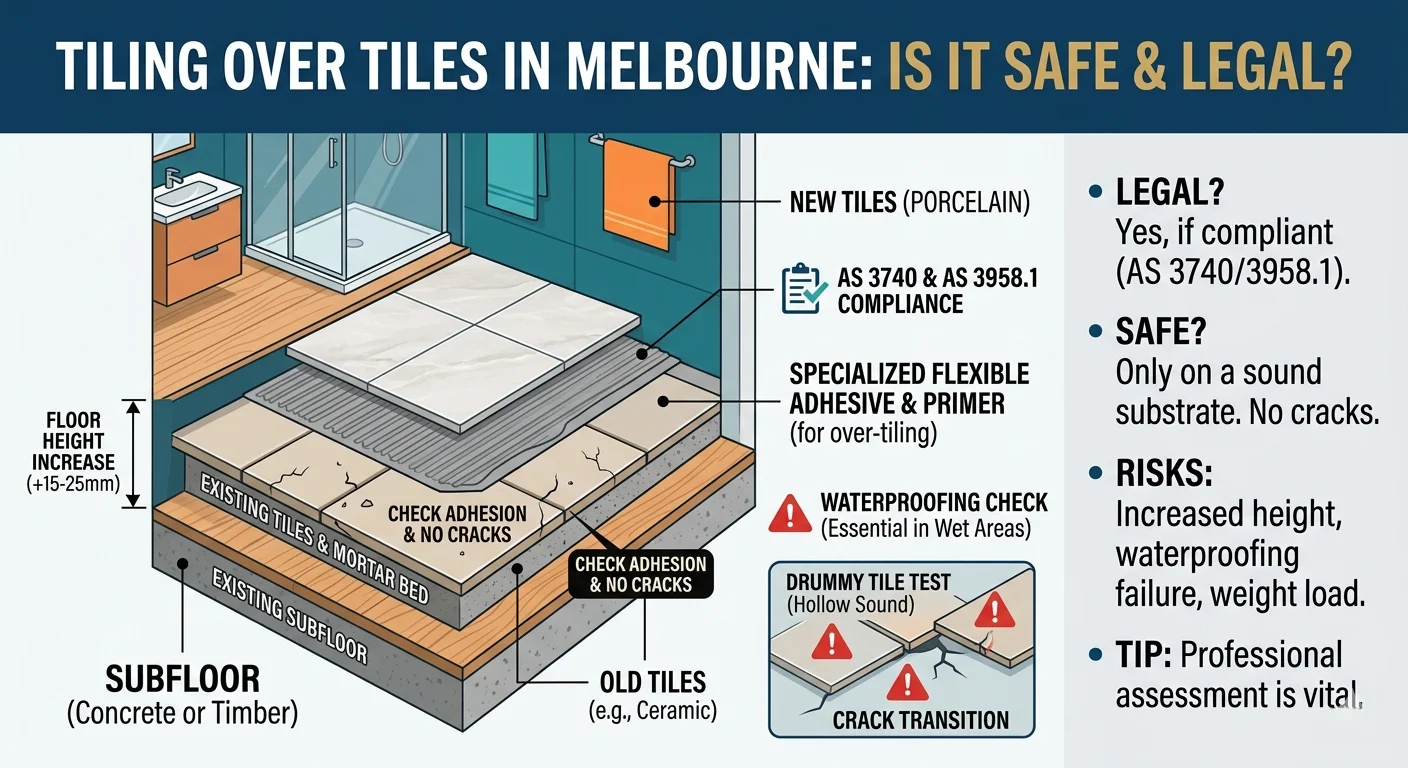
When planning a property update, finding ways to streamline timelines and manage expenses is a top priority. Preparing for a surface renovation often brings up the question of whether you can bypass the messy, labour-intensive demolition phase altogether. Specifically, many homeowners ask: can you tile over tiles Melbourne-wide, or is it a shortcut that leads to structural complications?
The idea of laying new ceramic or porcelain directly over an old surface is highly appealing. However, saving time on day one shouldn’t mean sacrificing the structural integrity of your floors or walls.
At Complete Construction Service, we emphasise building methods that balance efficiency with strict compliance. In this comprehensive guide, we analyse the structural safety, technical risks, financial trade-offs, and legal frameworks surrounding a tile-on-tile installation in Victoria.
Tiling Over Tiles: Building Code Australia & Legalities
Before looking at the technical side, it is essential to establish the legal rules. Homeowners regularly wonder: Is tiling over existing tiles legal in Melbourne?
Yes, it is legal, but it is strictly governed by performance benchmarks. When reviewing regulations like the tiling over tiles building code Australia mandates, any overlay project must comply fully with Australian Standards AS 3958.1 (for ceramic tile installation) and AS 3740 (for waterproofing wet areas).
+-----------------------------------------------------------------------+
|                    COMPLIANCE CHECK: TILE-ON-TILE                     |
+-----------------------------------------------------------------------+
|  [ AS 3958.1 Compliance ]  --> Requires structurally sound substrate  |
|                                with zero hollow or moving areas.      |
|                                                                       |
|  [ AS 3740 Compliance ]    --> Waterproofing must be continuous and   |
|                                underneath the primary tile bed.       |
+-----------------------------------------------------------------------+
The primary hurdle under the building code relates to moisture management. If you plan a tile over tile bathroom Australia–wide, the code stipulates that a wet area must remain completely watertight. If the underlying waterproofing layer fails or has reached the end of its operational lifespan, laying a new layer of materials directly over the top does not fix the hidden structural flaw.
When Can You Tile Over Tiles in Melbourne?
An overlay installation is never a one-size-fits-all solution. It is only viable under highly specific, pristine substrate conditions. You can generally consider a tile-on-tile approach in dry living zones, kitchen splashbacks, or hallways if the original installation passes a strict structural audit.
How to Test Your Substrate:
To determine if your floor is a candidate for an overlay, perform a thorough physical assessment:
-
The Sound Test: Take a solid tool or broom handle and tap firmly across every single section of the existing floor. If you hear a hollow, drum-like ring, the underlying mortar bed has failed, resulting in detached tiles.
-
The Level Check: Use a long spirit level to check the flat plane of the room. Any significant humps, bowing, or sagging will be amplified when you apply a second layer, causing noticeable lippage.
-
The Stress Check: Look closely for any existing fractures. You should never tile over cracked tiles in a Melbourne bathroom or living space. A crack indicates structural movement underneath, and that movement will easily transfer directly up into your expensive new porcelain.
The Real Risks of Tiling on Top of Old Tiles in a Bathroom
While a dry kitchen splashback is relatively straightforward, a tiling on top of old tiles in a bathroom Melbourne project carries significant long-term risks. This explains why many professional installers often recommend a complete strip-out instead of an overlay.
1. Compromised Wet Area Waterproofing
The single biggest danger when you retile over existing tiles in Melbourne bathrooms is the lack of a proper moisture barrier. If your home is more than 10 to 15 years old, the original waterproofing membrane is likely near the end of its life. If you lay new tiles over the old ones, you cannot install a compliant new waterproofing membrane on top of the old tiles without creating a weak bond. If moisture seeps through the new grout lines, it gets trapped between the two tile layers, creating an ideal environment for toxic mould growth, wood rot, and structural breakdown.
2. Floor Height and Weight Complications
Adding a fresh layer of adhesive and stone or porcelain significantly alters the dimensions of a room. Property owners frequently ask: ” How thick does the floor get when you tile over existing tiles in Melbourne?
A standard overlay typically adds 15mm to 25mm of extra height to your floor structure. This increase creates noticeable problems:
- Floor levels will no longer align smoothly with adjacent hallway carpets or hardwood floors.
- Internal doors must be unhinged and trimmed along the bottom to clear the new floor height.
- The dead-weight load on timber floor joists increases substantially, which can cause structural sagging over time.
Cost Comparison: Shortcut vs. Complete Strip-Out
When managing a project independently, it is important to look at the numbers. Is it cheaper to tile over old tiles or remove and replace in Melbourne?
Initially, an overlay appears more cost-effective because it eliminates demolition labour and waste disposal fees. However, preparing an old tile surface for a new installation requires meticulous, specialised trade work.
A professional tiler must thoroughly grind away old glazes, apply highly specialised, expensive chemical eco-primers, and use premium polymer-modified adhesives to ensure proper bonding. When you factor in the cost of these premium materials, the price gap narrows significantly. Furthermore, if the overlay fails three years down the track, repairing the floor requires removing both layers, doubling your ultimate financial outlay.
Secure Compliant Quality with Complete Construction Service
Because of the high potential for liability and structural failure, a reputable Melbourne tiler may refuse to tile over existing tiles if the underlying base shows any signs of movement, moisture, or deterioration.
At Complete Construction Service, we treat your home’s structural longevity as our absolute priority. Our experienced specialists provide comprehensive on-site consultations to assess the structural integrity of your existing surfaces. If a tile-on-tile installation can be executed safely and in full compliance with Victorian building codes, we utilise advanced prep systems and premium flexible adhesives to deliver a flawless, level finish. If hidden structural issues are present, we walk you through an efficient, clean demolition and remediation plan to protect your home for decades to come.
Contact Complete Construction Service today to speak with a local specialist and schedule an expert structural assessment for your tiling project.