

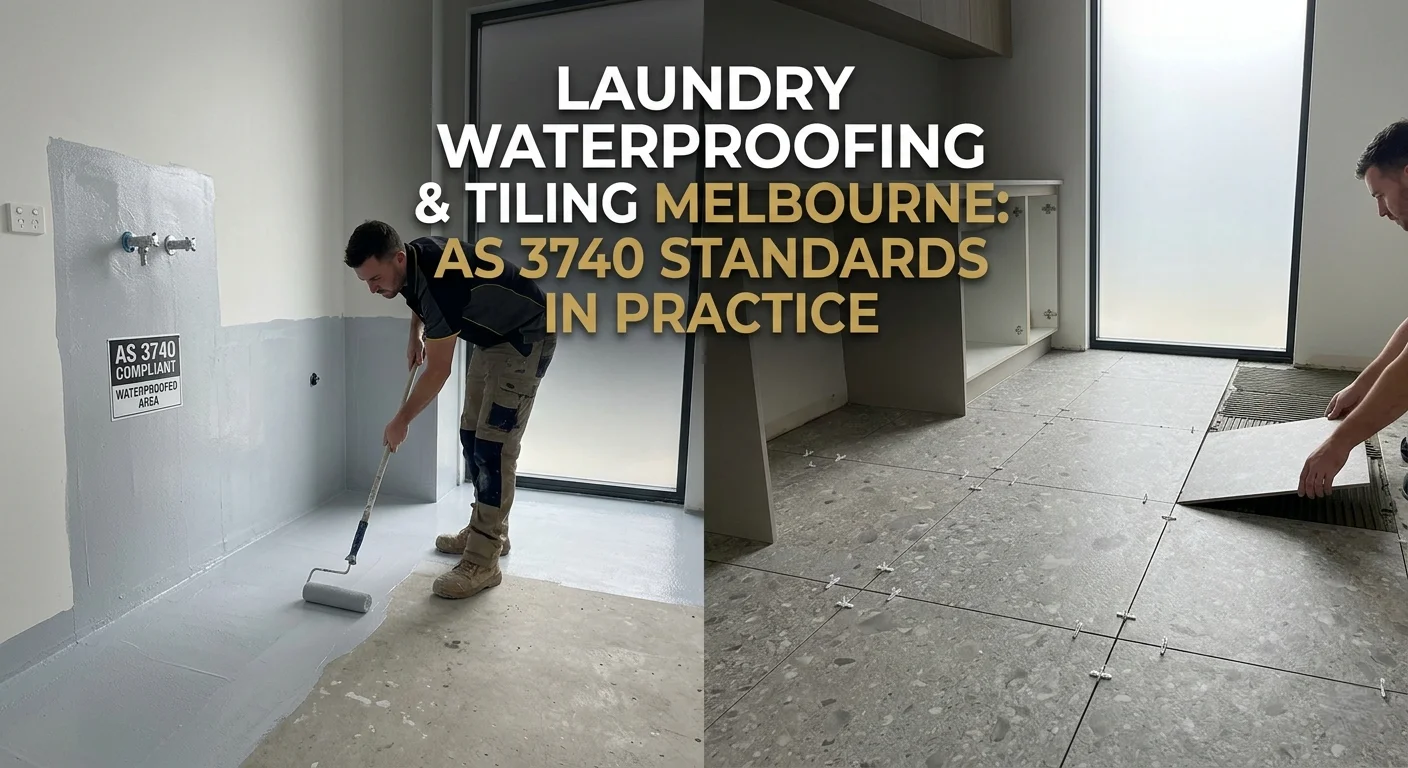
Laundry Waterproofing & Tiling Melbourne: What the Australian Standards Require & How to Get It Right
When planning a home improvement project, the laundry room is often viewed purely through the lens of storage efficiency and cabinetry layout. However, just like bathrooms, laundries handle high water volumes, heavy appliance vibrations, and significant humidity. Proper surface protection is a fundamental structural necessity, not an optional upgrade. Navigating the legalities and trade requirements is a critical component of managing a successful laundry renovation Melbourne project.
At Complete Construction Service, we provide certified laundry tiling Melbourne and advanced moisture barrier solutions designed to meet strict structural demands while delivering beautiful visual finishes. In this professional guide, we break down exactly what the current Australian Standards dictate, how much you should budget, and how to execute your renovation seamlessly.
Does a Laundry Need to Be Waterproofed in Melbourne?
A common point of confusion for property owners is understanding the core regulations surrounding utility rooms. The short answer is yes. Under the National Construction Code (NCC) and AS 3740 laundry requirements, Melbourne builders must follow, laundries are officially classified as indoor wet areas.
The primary difference between a bathroom and a laundry lies in the classification of risk zones. While a bathroom features a high-risk zone (the shower enclosure), a laundry is typically considered a low-to-medium risk area unless a dedicated shower module is installed within the space. Despite this lower immediate classification, failing to establish a continuous water-resistant barrier leaves your home exposed to severe structural damage.
What Happens If Laundry Waterproofing Fails?
If water breaches your floor coverings, it will quickly track down into the subfloor. For upper-level installations or properties built on timber stumps, this tracking can rot structural framing, compromise ceiling sheets below, and cause severe timber delamination. On concrete slabs, persistent dampness leads to concrete cancer, rusty reinforcement bars, and an ongoing battle with black mould and fungal growth. This compromises your indoor air quality and voids standard home insurance policies, which do not cover gradual water ingress caused by poor workmanship.
What Areas of a Laundry Require Waterproofing Under AS 3740?
To achieve compliance and pass final building inspections, specific structural intersections must be completely sealed with an approved liquid membrane system.
The Entire Floor Plane: If your floor substrate is constructed from timber, particleboard, or is located on an upper floor level, waterproofing under laundry floor Melbourne regulations states the entire surface must be sealed. On a ground-floor concrete slab, a water-resistant layer is still essential to handle general splashes and pooling water.
Wall-to-Floor Junctions: The horizontal junctions where your floor meets the wall must be turned up the wall by a minimum of 150mm. This forms a watertight tray that contains pooling water if a washing machine hose bursts.
The Tap and Vessel Splashback Areas: Wall surfaces directly behind washing machine taps, laundry tubs, and adjacent sinks must be waterproofed to a minimum height of 300mm above the benchtop surface or vessel rim.
Penetrations: All drainage outlets, pipe penetrations, and tap fittings must be fully sealed using specialised flexible gaskets or bond-breakers to stop water from bleeding behind the wall sheets.
Planning the Tiling Layout: Aesthetics and Safety
Once the underlying protective membrane has cured completely, the focus shifts to selecting your laundry room tiles Melbourne finishes.
Because laundries are prone to soap spills and wet surfaces, safety should dictate your tile choice. The best tiles for laundry floor Melbourne installations feature a minimum P3 or P4 slip-resistance rating. Matte-finish porcelain tiles are highly recommended by trade professionals due to their exceptionally low porosity, immense density, and resistance to heavy foot traffic and chemical bleaching agents.
Preparing Older Substrates
If you are working on an older Victorian or Edwardian home, substrate preparation is everything. Timber floors must be structurally reinforced and covered with a fibre-cement tile underlay before a membrane is applied. Directly tiling over old, shifting floorboards will instantly cause your grout lines to crack and fracture the underlying waterproofing system.
Permitting and Project Costs across Victoria
Understanding the financial and legal frameworks ensures your renovation proceeds smoothly without unexpected compliance delays.
Can I Renovate My Laundry Without a Building Permit?
In most cases, if you are performing a straightforward cosmetic replacement of tiles, cabinetry, and fixtures within the existing footprint without changing the structural walls or moving structural plumbing points, a formal building permit is not required in Melbourne. However, under Victorian building regulations, the wet area waterproofing laundry Melbourne process must still be completed in strict accordance with AS 3740. In Victoria, this critical application must be carried out or signed off by a licensed professional who can provide an official compliance certificate, which is essential when it comes time to sell your property.
How Much Does Laundry Waterproofing and Tiling Cost?
Every floor plan varies based on scale and layout, but standard market pricing across Melbourne generally follows these parameters:
When applied correctly by certified installers, a premium-grade elastomeric membrane will easily last past 20 to 25 years, protecting your structural frame for the entire lifecycle of the room.
Get It Right the First Time with Complete Construction Service
Cutting corners on hidden waterproofing layers to save a few dollars on a renovation invariably results in structural failure, ruined joinery, and highly disruptive structural repairs down the track.
At Complete Construction Service, we specialise in bulletproof wet-area preparation and flawless tile placement. Our licensed trade specialists systematically prepare your substrates, install engineered bond-breaking systems, and apply multi-coat membranes that strictly exceed minimum Australian Standards. We back our certified wet-area applications with comprehensive trade warranties, giving you total peace of mind knowing your home is structurally secure.
Contact Complete Construction Service today to speak with a wet area specialist and secure a detailed quote for your laundry transformation.